
They are parents, children, partners, other relatives and friends who assist with a variety of personal care, health care, transport, navigating complex service systems, managing financial tasks, emotional support, household chores and other activities.

Every care situation is different. Some carers provide 24-hour nursing aid to a family member with high care needs. They help with daily needs and activities like feeding, bathing, dressing, toileting, lifting and moving, and administering medications.
Others care for people who are fairly independent but may need someone to keep an eye on them or help them with tasks like banking, transport, shopping and housework.
Most carers give comfort, encouragement and reassurance to the person they care for, oversee their health and wellbeing, monitor their safety and help them stay as independent as possible. Carers help their family members to have a good quality of life.
People become carers in different ways. Sometimes it happens gradually, helping out more and more as a person’s health and independence gets worse over time. It may also happen suddenly, such as after a health crisis (like a stroke or heart attack) or an accident.
Carers often feel that they don’t really have a choice. In large families the responsibility of providing care is often left to one person, rather than being shared. Many carers feel that what they do is inherent in being a parent, good friend, neighbour, child or sibling.
Carers Victoria refers to a carer as a person who provides unpaid care and support to family members (of choice or origin) and/or friends with a disability, mental illness, chronic health issue or older person with care needs. Receiving an income support payment does not qualify a carer as being paid.
The Victorian legislation the Carer Recognition Act (2012) originally defined a carer as: An individual who provides personal care, support and assistance to another individual who needs it because that other individual (a) has a disability; or (b) has a medical condition (including a terminal or chronic illness); or (c) has a mental illness; or (d) is frail and aged.
The Victorian legislation includes reference to individuals who have custody and guardianship of a child under a permanent care order, a protection order or under a childcare agreement under the Children, Youth and Families Act 2005. However, Carers Victoria only advocates for those carers who are caring for a child with additional needs.
Since the legislation passed, the Department of Families, Fairness and Housing has released its Victorian Charter Supporting People in Care Relationships where it refers to older people, not the original definition in the Act of ‘frail and aged’.
For those in kinship care scenarios, please visit Kinship Carers Victoria
For those in foster care scenarios, please visit the Foster Care Association of Victoria
While each caring situation is different, many carers share similar experiences. Select the situation of the person you are caring for below to find information relevant for you.
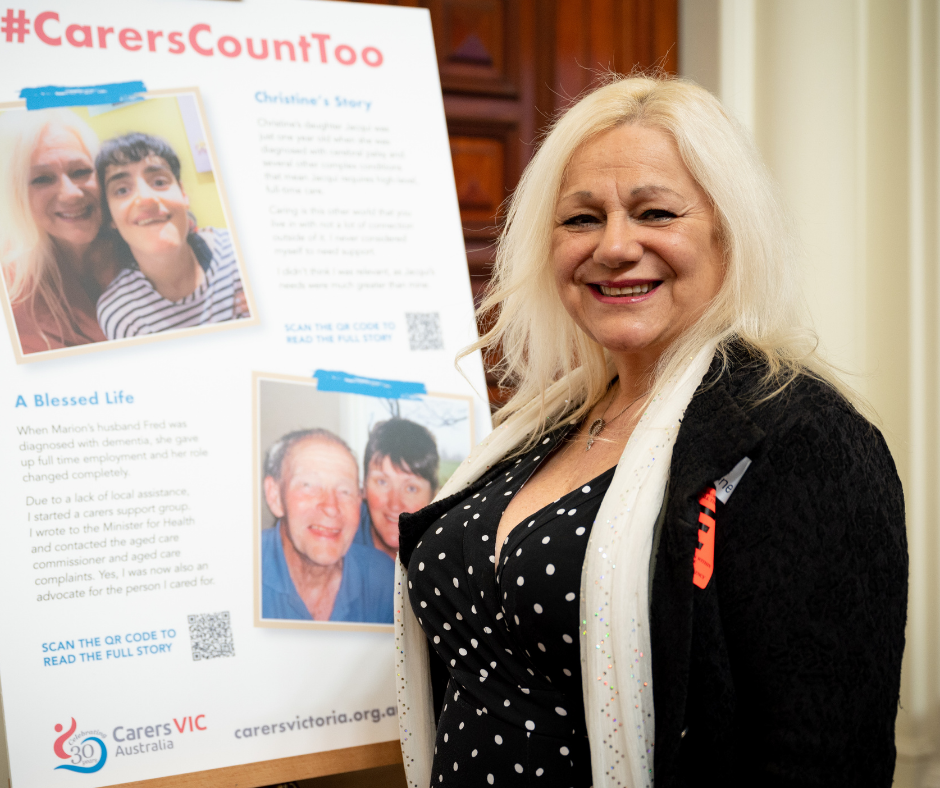
Whether you have just noticed changes as someone you know ages, or you have been caring for someone for years, Carers Victoria will help you find information and community connection. Find more help on supporting someone as they age.
Caring for a child with disability can bring questions and new challenges everyday. Carers Victoria brings together information, support options and ways to connect with others who understand. Find help for supporting a child with disability.
Ongoing illness can change plans, routines and responsibilities over time. Find information and support to help you manage the caring role and stay connected along the way. Go to our web page supporting someone who has a chronic illness.
Changes in memory, behaviour or daily routines can affect the whole caring relationship. Carers Victoria is a place to start for information and connection while supporting someone with dementia.
When someone you care about is experiencing mental illness, it can be hard to know what to do next. At Carers Victoria, you can find practical resources and opportunities to connect with your community. Find help for supporting a person with mental illness.
Whether you care for an adult child or another adult with disability, Carers Victoria can help you find useful information and connections to make everyday-caring feel more manageable. Find help for supporting an adult with disability.
Caring for someone near the end of life can be emotional, physical and deeply personal. Carers Victoria offers information, support and connection to help you through this stage. Go to our web page supporting someone at end of life.

Caring for someone?
You’re not alone.